What We Call Reentry in America
Part 1 of 4 — This Is Not Reentry
The Structural Continuity of Confinement in State-Funded Transitional Facilities
By James Byers

Introduction: The Language of Softened Reality
There is a certain kind of language this country uses when it wants to make something harsh sound reasonable.
It says transitional housing.
It says reentry placement.
It says community-based correctional facility.
Those phrases are not accidental. They perform a function. They create distance between what something is and what it sounds like. Because if these environments were described plainly in terms of structure, control, dependency, and lived experience most people would recognize them immediately for what they are.
And they would ask uncomfortable questions. So instead, we rename them. But words do not change walls. Words do not change control systems. Words do not change the lived experience of confinement.
This paper examines the gap between what we call reentry and what reentry often is in practice. It examines the difference between policy language and structural reality. It examines how environments labeled as transitional frequently remain psychologically, behaviorally, and operationally continuous with incarceration itself.
And it begins with a simple question:
If you remove someone from prison, but place them into a prison-structured environment, have they actually reentered anything?
That question is not rhetorical. It is structural. Because if the structure communicates one reality while the label communicates another, then the label is not clarifying the system.
It is obscuring it.
And once that happens, everything built on top of that label — policy, programming, measurement, funding, expectation, and public understanding — begins from a false premise.
*In this paper we use the term halfway house as Texas uses it. In most other states what Texas calls a halfway house would be referred to as transitional housing or alternative housing. We are not generally discussing court-ordered or system/parole ordered facilities.
A Direct Comparison: No Interpretation Required
An open dormitory.
Four rows of 11 bunks.
Steel frames. Thin mattresses. An upright locker. A plastic chair.
A handful of steel tables with seats attached. A television mounted high enough that no one controls it. A bank of phones along the wall.
An open latrine with showers, toilets, sinks, and urinals.
A picket with a guard and a control board for lights and doors.
Laundry runs on schedule. Phones run on availability. Movement runs on permission.
Everything runs on structure.
That was prison.
Now change almost nothing.
An open dormitory.
Four rows of 11 bunks. Eighty-eight people.
Same steel bunks. Same mattresses.
An upright old-school locker with one shelf and a place to hang clothes. A plastic tub under the bed.
A plastic prison industries chair issued to every resident.
A wall-mounted television with only a handful of over-the-air channels.
A microwave. A soda machine. A cooler of ice.
A bank of phones.
An open latrine with showers, toilets, sinks, and urinals.
A picket with a control board for lights and doors.
Shackles and handcuffs visible in the picket.
Uniformed staff carrying pepper spray and restraints.
Movement still controlled.
Schedules still imposed.
Permission still required.
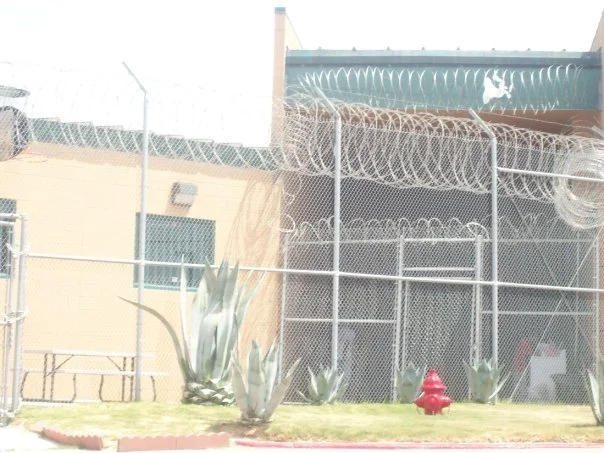
That was the El Paso Multi-Use Facility — a state-contracted halfway house.
If someone described both of those environments to you without labels, would you assume one was prison and the other was reentry?
Or would you recognize them as variations of the same structure?
That is the issue at the center of this paper.
Because if two environments produce the same behavioral conditions, communicate the same institutional logic, and maintain the same underlying control systems, then changing the label does not fundamentally change the experience.
And if that is true, then the current reentry model has a structural problem far deeper than terminology.
Defining Reentry: A Functional Framework
Before evaluating what currently exists, we have to define what reentry actually is.
Not rhetorically. Not politically. Structurally.
Reentry is not merely release from prison. Reentry is not supervision status. Reentry is not geographic proximity to a community. Reentry is a functional condition.
A person is in genuine transition when they are:
making independent decisions about daily life
structuring their own time without imposed schedules
navigating real-world consequences without institutional buffering
interacting with society as participants rather than managed subjects
developing autonomy within a framework of accountability and responsibility
These are not abstract concepts. They are operational requirements. Without them, transition does not occur. What occurs instead is managed existence.
And that distinction matters because environments shape behavior.
Every institution teaches.
Schools teach.
Military systems teach.
Workplaces teach.
Prisons teach.
The question is never whether an environment teaches.
The question is what it teaches.
An environment organized around control, dependency, permission, and externally imposed structure teaches those things.
An environment organized around autonomy, responsibility, and participation teaches something entirely different.
If a system claims to prepare individuals for independent living, but never structurally requires independent living, then it is not preparing people for transition.
It is preparing them for continued management. Research across correctional rehabilitation, environmental psychology, and reentry studies increasingly supports a principle that should already be obvious: environments shape behavior.
The National Institute of Justice, the Urban Institute, and multiple longitudinal reentry studies have repeatedly identified housing stability, employment continuity, community integration, and social support as primary predictors of successful reintegration outcomes. Yet many transitional environments remain organized around institutional management rather than autonomy development.
Criminologist Donald Clemmer’s concept of “prisonization” described the process by which incarcerated individuals adapt psychologically and behaviorally to institutional culture. Later research expanded this understanding, demonstrating that prolonged exposure to externally controlled environments reduces opportunities for independent decision-making, self-regulation, and autonomous problem-solving — precisely the capacities required for long-term community stability after release.
Similarly, sociologist Erving Goffman’s work on “total institutions” identified how institutional systems reorganize identity, behavior, and daily functioning around externally imposed structures. While halfway houses are obviously not identical to prisons, many current reentry models preserve enough institutional continuity that individuals remain behaviorally and psychologically organized around externally controlled systems rather than independent living.
The issue is not whether halfway houses are technically prisons. The issue is whether they remain structurally organized around incarceration logic.
And in many cases, they clearly do.
The Current Model: A Case Study in Misclassification
To understand the problem, we need to examine what is currently being labeled as reentry.

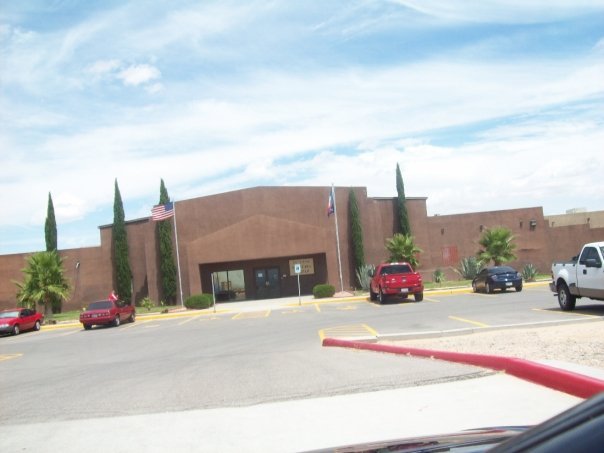
Using the El Paso Multi-Use Facility as a representative example of state-contracted transitional housing, we can break the current model down structurally.
· The environment is dormitory-based.
· Residents sleep in open communal arrangements.
· Storage is standardized.
· Furniture is standardized.
· Movement is regulated.
· Access to communication is limited.
· Laundry is shared.
· Bathrooms are communal.
· Schedules are imposed.
· Supervision is centralized.
· Uniformed authority remains visually and operationally present.
From a structural standpoint, the environment communicates one primary message: You are still being managed.
That matters because the environment itself becomes part of the behavioral system. The issue is not simply comfort. It is conditioning. People adapt to environments. They internalize the logic of the systems they exist inside.
And if the environment continues to reinforce dependency, externalized decision-making, and institutional structure, then the environment itself is reinforcing continuity with incarceration.
This is why so many individuals describe these facilities not as transition, but as extension. Because psychologically and behaviorally, that is what they feel like. The public often imagines reentry housing as something approximating independent living with support. But many current facilities are not structured around independent living. They are structured around controlled stability.
Those are not the same thing. Controlled stability prioritizes predictability, compliance, and risk management. Independent living prioritizes initiative, responsibility, decision-making, and adaptation. The first produces order inside the institution. The second produces readiness outside of it.
And those outcomes should not be confused.
Structural Continuity of Confinement
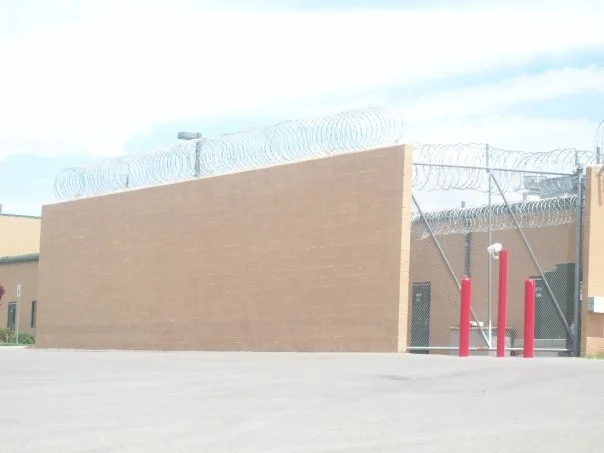
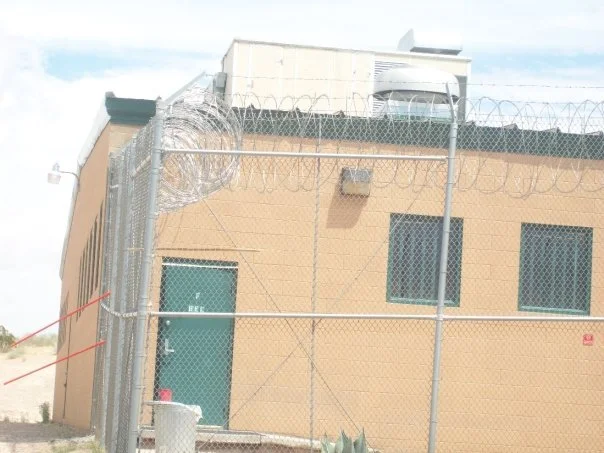
Incarceration is often misunderstood as a purely physical condition. People imagine fences, razor wire, locked cells, and perimeter walls. Those things matter.
But they are not the defining feature of incarceration. The defining feature of incarceration is control.
· Who controls movement?
· Who controls time?
· Who controls environment?
· Who controls access?
· Who controls consequences?
If those controls remain institutionally centralized, then incarceration remains structurally present. The absence of visible barriers does not necessarily indicate freedom. It may simply indicate a softer form of confinement. This is where the current reentry model becomes conceptually misleading.
The public often evaluates these systems visually. If the environment appears less severe than prison, people assume transition is occurring. But behavior is shaped less by appearance than by structure.
A dormitory with imposed schedules, restricted movement, centralized authority, and limited autonomy still teaches institutional dependency. And dependency cannot produce independent functioning.
That is not ideology. It is behavioral reality. The structure teaches the outcome.
If an environment does not require:
initiative
self-management
consequence navigation
responsibility for daily functioning
then those capacities are not being developed. And if they are not being developed before release, they do not suddenly appear after release. This is why so many individuals move from one structured environment directly into instability. The transition never actually occurred.
Only the location changed.
Relocation vs. Transition
This distinction is one of the central failures of the current model.
- Relocation is movement between environments.
- Transition is a change in functional capacity.
The current system often achieves relocation. It does not achieve transition. Because transition requires progressive exposure to independent functioning.
It requires:
increasing autonomy over time
graduated decision-making responsibility
opportunities to fail safely and recover
reduced external control
real-world consequence navigation
Those conditions are not structurally embedded into many halfway house systems. Instead, the system maintains control until final release. Which creates a fundamental contradiction. Individuals are expected to function independently after spending years operating within externally imposed systems.
But independent functioning is not theoretical.
- It is practiced.
- Time management is practiced.
- Decision-making is practiced.
- Risk assessment is practiced.
- Financial management is practiced.
- Relationship management is practiced.
- Community integration is practiced.
If those things are not actively exercised inside the environment, then the environment is not preparing people for independence. It is delaying exposure to it. And delayed exposure is not preparation. It is postponement.
This distinction matters because modern corrections policy frequently treats physical movement as evidence of transition.
But movement between controlled environments is not reintegration. It is relocation. A person can be geographically outside prison while still behaviorally and structurally embedded inside correctional logic.
That is exactly what many current systems produce.
Behavioral Conditioning and Institutional Dependency
Research in behavioral psychology consistently demonstrates that human beings adapt to repeated environmental conditions.
Behaviors that are rewarded, reinforced, or structurally required become normalized over time.
Behaviors that are unnecessary, discouraged, or risky gradually diminish.
Within correctional systems, this adaptation process is often functional and rational.
Avoiding unnecessary attention, minimizing conflict, complying with institutional expectations, and relying on imposed schedules can become survival-oriented behaviors.
But behaviors adaptive inside institutions are not always adaptive outside them.
Studies examining institutionalization effects among incarcerated populations, military environments, psychiatric systems, and long-term residential institutions have repeatedly documented similar patterns:
reduced independent initiative
increased dependence on external structure
avoidance of discretionary decision-making
difficulty functioning in unstructured environments
elevated stress during periods of transition
Research published through the Urban Institute’s Returning Home study and similar longitudinal reentry projects repeatedly identified instability during the immediate post-release period as one of the strongest predictors of failure outcomes, including homelessness, unemployment, technical violations, and recidivism.
Controlled environments produce predictable behavioral adaptations.
Over time, individuals learn to:
minimize initiative
wait for instruction
avoid unnecessary risk
defer decision-making to authority
structure behavior around compliance rather than ownership
These are not moral failings. They are adaptive responses. People learn the rules of the systems they exist inside. The problem emerges when those same adaptive behaviors become maladaptive outside institutional settings. Because independence requires the opposite traits.
Independent living requires:
initiative
self-direction
tolerance for uncertainty
decision-making under pressure
long-term planning
personal accountability without supervision
Those capacities are not restored automatically. They have to be rebuilt. And rebuilding requires environments where they are structurally necessary. A system that continues to organize life around control and compliance cannot simultaneously develop autonomous functioning.
The behavioral incentives are contradictory.
The Psychological Transition Gap
The current model assumes that individuals can move from dependency to independence in a single step. There is little evidence supporting that assumption. Psychologically, the transition from externally controlled living to independent functioning is significant.
People leaving long-term institutional environments frequently experience:
decision fatigue
overstimulation
anxiety around unstructured time
difficulty prioritizing tasks
uncertainty around self-directed routines
emotional dysregulation under pressure
This is not unique to corrections. Institutional dependency has been observed in multiple environments involving prolonged external control. The issue is not weakness. It is adaptation. Human beings adapt to systems. And systems organized around imposed structure reduce the necessity of self-organization.
When release occurs abruptly, individuals are suddenly expected to manage:
housing
transportation
employment
supervision requirements
finances
social relationships
scheduling
healthcare
community navigation
simultaneously.
This creates what cognitive psychology would describe as a high decision-density environment. For individuals who have not been practicing independent decision-making consistently, the result is often overload. And overload increases the likelihood of reactive rather than strategic behavior. This is one reason instability frequently appears immediately after release. Not because individuals are incapable of functioning. But because the system withheld the opportunity to practice functioning until the consequences became high-risk.
The Cliff Effect
The current reentry model frequently produces what can best be described as a cliff transition.
An individual moves from:
controlled schedules
imposed structure
restricted movement
externally managed decisions
buffered consequences
into:
complete independence
unstructured time
self-directed survival
immediate consequence exposure
complex real-world navigation
There is no ramp. There is no gradual transition. There is no meaningful environmental gradient. The system simply removes the structure.
In nearly every other field involving human development, abrupt transitions are recognized as destabilizing.
Education uses scaffolding.
Workforce systems use probationary phases.
Physical rehabilitation uses graduated exposure.
Military systems use progressive responsibility.
Corrections frequently does the opposite.
Control is maintained until the final moment.
Then independence is expected instantly.
This is not transition.
It is shock exposure.
At release, individuals are suddenly expected to:
secure housing
maintain employment
comply with supervision
manage transportation
regulate schedules
rebuild social networks
avoid destabilizing environments
all at once.
And they are expected to do so after spending years inside systems that minimized the need for independent functioning. That contradiction is rarely acknowledged directly. Instead, failure is individualized. The person becomes the problem. But structurally, the environment itself helped produce the instability.
The cliff effect is not where failure begins.
It is where failure becomes visible.
Why the System Produces This Model
The persistence of the current model is not primarily ideological.
It is structural.
Halfway house systems developed historically as administrative extensions of correctional management rather than as fully independent transition ecosystems. Their operational logic emerged from corrections infrastructure, contracting systems, and supervision requirements — not from environmental design research or long-term reintegration modeling.
The Vera Institute of Justice, the Urban Institute, and multiple Department of Justice publications have repeatedly identified fragmentation within reentry systems as a major obstacle to effective reintegration. Responsibility for reentry is often divided across corrections agencies, parole systems, workforce organizations, housing providers, nonprofit contractors, and local jurisdictions.
As a result, systems frequently optimize around short-term institutional goals rather than long-term independence outcomes.
Research on correctional contracting and privatized reentry environments also demonstrates recurring pressure toward:
operational standardization
liability minimization
cost-per-bed efficiency
centralized supervision
measurable compliance outputs
These priorities are administratively rational. But they are not necessarily transition-oriented. This model is not accidental. It exists because it aligns with institutional incentives. The current system is optimized less for transition than for management. Several structural pressures reinforce that design.
Liability Reduction
Controlled environments reduce institutional risk.
Restricted movement, centralized supervision, and dormitory structures allow organizations to demonstrate oversight and control.
From a liability standpoint, this is rational.
From a transition standpoint, it is limiting.
Because the same controls that reduce institutional exposure also reduce opportunities for autonomous functioning.
Administrative Efficiency
Dormitory models are easier to manage.
They require fewer staff per resident.
They centralize observation.
They standardize policy enforcement.
They simplify operations.
But operational efficiency is not the same thing as developmental effectiveness.
An environment optimized for management is not necessarily optimized for transition.
Cost Structures
Many state-contracted facilities operate within cost-per-bed funding structures.
Shared infrastructure reduces:
construction expense
operational overhead
staffing costs
maintenance complexity
This creates incentives toward density and standardization. The system becomes financially incentivized to build efficient containment rather than individualized transitional environments.
Measurability Bias
Institutions measure what is easy to track.
Inside controlled environments, systems can easily monitor:
rule compliance
attendance
curfew adherence
incident reports
program completion
Those metrics are clean, reportable, and administratively defensible.
What is harder to measure:
independent functioning
self-regulation
initiative
community integration
long-term autonomy
So, the system defaults toward measurable compliance. And then it mistakes compliance for readiness.
Fragmented Accountability
Reentry is fragmented across multiple systems:
corrections
parole and probation
contractors
housing systems
workforce systems
nonprofit providers
Each component optimizes for its own operational priorities.
- Corrections prioritizes control.
- Contractors prioritize contracts.
- Supervision prioritizes compliance.
- Housing systems prioritize availability.
Very few entities are structurally accountable for long-term independence outcomes. So, the system succeeds at management while failing at transition. And because management is visible while transition is harder to measure, the underlying design problem often goes unnoticed.
Measurement Failure: The Illusion of Success
One of the most significant weaknesses in current reentry policy is the tendency to measure what is administratively convenient rather than what is structurally meaningful.
The Bureau of Justice Statistics has consistently documented high rates of rearrest, technical violation, housing instability, and employment disruption among formerly incarcerated populations. Yet despite decades of disappointing long-term outcomes, many systems continue evaluating reentry environments through short-term institutional metrics rather than longitudinal independence measures.
This creates a distortion in both policy and public understanding.
If controlled environments are defined as reentry, then performance within those environments becomes the measurement of reentry success.
Inside these facilities, the system can easily measure:
rule compliance
class attendance
curfew adherence
incident reduction
completion of required programming
These metrics are quantifiable.
- They create charts.
- They produce reports.
- They satisfy audits.
But they do not necessarily measure readiness for independent living. The system frequently confuses compliance with capacity.
- Compliance means following imposed expectations.
- Capacity means functioning independently without imposed structure.
Those are not the same thing.
An individual can complete every required class, maintain perfect attendance, avoid disciplinary problems, and still lack:
financial management skills
independent scheduling ability
crisis navigation capacity
stable self-regulation
community integration experience
The issue is not effort. The issue is that the system measures what it structurally produces. And what it structurally produces is controlled stability. Not independent functioning.
This distortion persists because compliance metrics are administratively convenient. They are easier to track than long-term autonomy. It is much easier to measure whether someone attended a class than whether they can maintain stable independent living for five years.
So, systems optimize toward measurable outputs. Then mistake those outputs for outcomes. Research on reentry consistently indicates that long-term stability is strongly associated with:
housing stability
employment continuity
social integration
supportive community relationships
opportunities for independent functioning
Yet many transitional systems continue to prioritize behavioral management metrics over autonomy development. The result is a system that can document participation while failing to produce lasting stability.
And because the metrics themselves appear positive, the underlying structural failure remains partially hidden.
What the System Says vs. What It Does
The system says:
we are preparing individuals for reintegration
we are supporting independence
we are helping people transition back into society
But structurally, the system often does something else.
It:
maintains control systems
delays independent functioning
reinforces institutional dependency
prioritizes compliance over autonomy
stages people near society without fully integrating them into it
This is not simply a gap in execution. It is a contradiction in design. Because the structure itself communicates the priority. And the priority frequently remains management.
Not transition.
This distinction matters because systems produce outcomes consistent with their structure. If the structure remains correctional, the outcomes will continue to reflect correctional logic.
No amount of branding language changes that reality.
Broader Implications
The consequences of structurally inadequate reentry systems extend far beyond the individuals directly experiencing them.
The Prison Policy Initiative, Bureau of Justice Statistics, and multiple labor-market studies have repeatedly documented how housing instability, criminal record barriers, transportation limitations, and weak community integration create long-term economic consequences not only for formerly incarcerated individuals, but also for families, employers, local economies, and public systems.
Research from the National Institute of Justice and RAND Corporation has additionally demonstrated that stable employment and housing are among the strongest long-term predictors of reduced recidivism. Yet those outcomes depend heavily on environmental stability and functional autonomy.
When systems emphasize compliance over independent functioning, they frequently produce short-term institutional order while failing to produce durable long-term stability.
The consequences of this model extend far beyond the facilities themselves.
Workforce Instability
Individuals leaving controlled environments are often expected to immediately function within unstructured workplaces.
But they may not have been practicing:
self-management
independent prioritization
conflict navigation
time organization
autonomous problem-solving
This creates predictable instability. Employers often interpret this instability as lack of reliability. But structurally, many individuals were never placed in environments that required independent functioning before release.
Recidivism Pressure
Recidivism is frequently framed as personal failure. But instability is often structurally produced.
When individuals leave systems without:
stable housing
practiced autonomy
strong community integration
functioning support networks
they become more vulnerable to reactive decision-making and survival-driven behavior. These are not irrational responses. They are predictable responses to instability.
Economic Cost
The financial consequences of failed reintegration extend well beyond incarceration costs.
They include:
repeated incarceration expenses
law enforcement costs
court system burden
lost workforce productivity
emergency healthcare utilization
public assistance strain
A system that repeatedly cycles individuals through instability is not reducing cost. It is redistributing it across institutions.
Community Disconnection
Many current models physically place individuals near communities while structurally separating them from meaningful participation.
People are housed near society. But they are not necessarily integrated into it.
That distinction matters.
Communities remain psychologically disconnected from justice-impacted individuals. Residents remain isolated from ordinary civic participation. And public fear and misunderstanding continue.
This contributes directly to:
NIMBY resistance
zoning opposition
political reluctance
public suspicion toward transitional housing
The current structure unintentionally reinforces the very separation it claims to reduce.
Policy Distortion
When controlled environments are labeled as reentry, policy responses become distorted. Funding expands the same models rather than redesigning them. The assumption becomes:
- we need more capacity.
Instead of:
- we need different structures.
That distinction is critical. Because scale does not solve structural contradictions. It multiplies them.
Conclusion: Structural Truth
At every level — architectural, behavioral, operational, and psychological — the current model maintains continuity with incarceration.
It does not interrupt confinement.
It extends it. We have created systems that:
control movement
structure time
limit autonomy
centralize authority
define success through compliance
and then expect individuals to leave those systems prepared for independent living. That is not a gap in effort. It is a contradiction in design. Because independence is not something that appears automatically at release.
It is something that must be practiced both before release and actively during the post-release stage. Release into an environment that is labeled as post-release but does not allow for this is structurally designed to fail.
If the environment does not require:
decision-making
self-management
consequence navigation
personal accountability
then those capacities are not being fully developed.
And if they are not developed before release, they do not suddenly emerge afterward. So, the system produces exactly what it is structurally organized to produce:
- Compliance inside.
- Instability outside.
And then we mislabel the result. We call it individual failure. When in many cases it is structural failure. This is not reentry.
- It is incarceration with modified terminology.
- It is control without the appearance of control.
- It is management presented as transition.
And as long as we continue to define these environments as reentry, we will continue to misunderstand why outcomes remain unchanged.
Because nothing fundamental has changed.
The architecture may differ in minor ways. The terminology definitely differs. But the structure does not. And if the architecture itself doesn’t change…
What Comes Next
This paper is not intended to provide a complete solution.
Its first responsibility is clarity.
Because before systems can be redesigned honestly, they must first be described honestly.
The remaining papers in this series will examine:
the private halfway house model in Texas
the limits of higher-performing transitional systems
and the structural requirements of a true reintegration model
including the environmental, operational, educational, workforce, and community integration principles underlying Reentry Infrastructure Systems & Services (RISS).
Because if we want different outcomes, we have to build different systems.
Not simply relabel the ones we already have.
References and Supporting Research
Bureau of Justice Statistics. 2018 Update on Prisoner Recidivism: A 9-Year Follow-Up Period (2005–2014). U.S. Department of Justice.
Clemmer, Donald. The Prison Community. Holt, Rinehart and Winston, 1940.
Goffman, Erving. Asylums: Essays on the Social Situation of Mental Patients and Other Inmates. Anchor Books, 1961.
National Institute of Justice. Five Things About Reentry. U.S. Department of Justice.
Prison Policy Initiative. Reentry, Housing, and Employment Research Reports.
RAND Corporation. Evaluating the Effectiveness of Correctional Education and Reentry Programs.
Urban Institute. Returning Home Study Series.
Vera Institute of Justice. Investing in Evidence-Based Reentry Strategies.
Western, Bruce. Homeward: Life in the Year After Prison. Russell Sage Foundation, 2018.