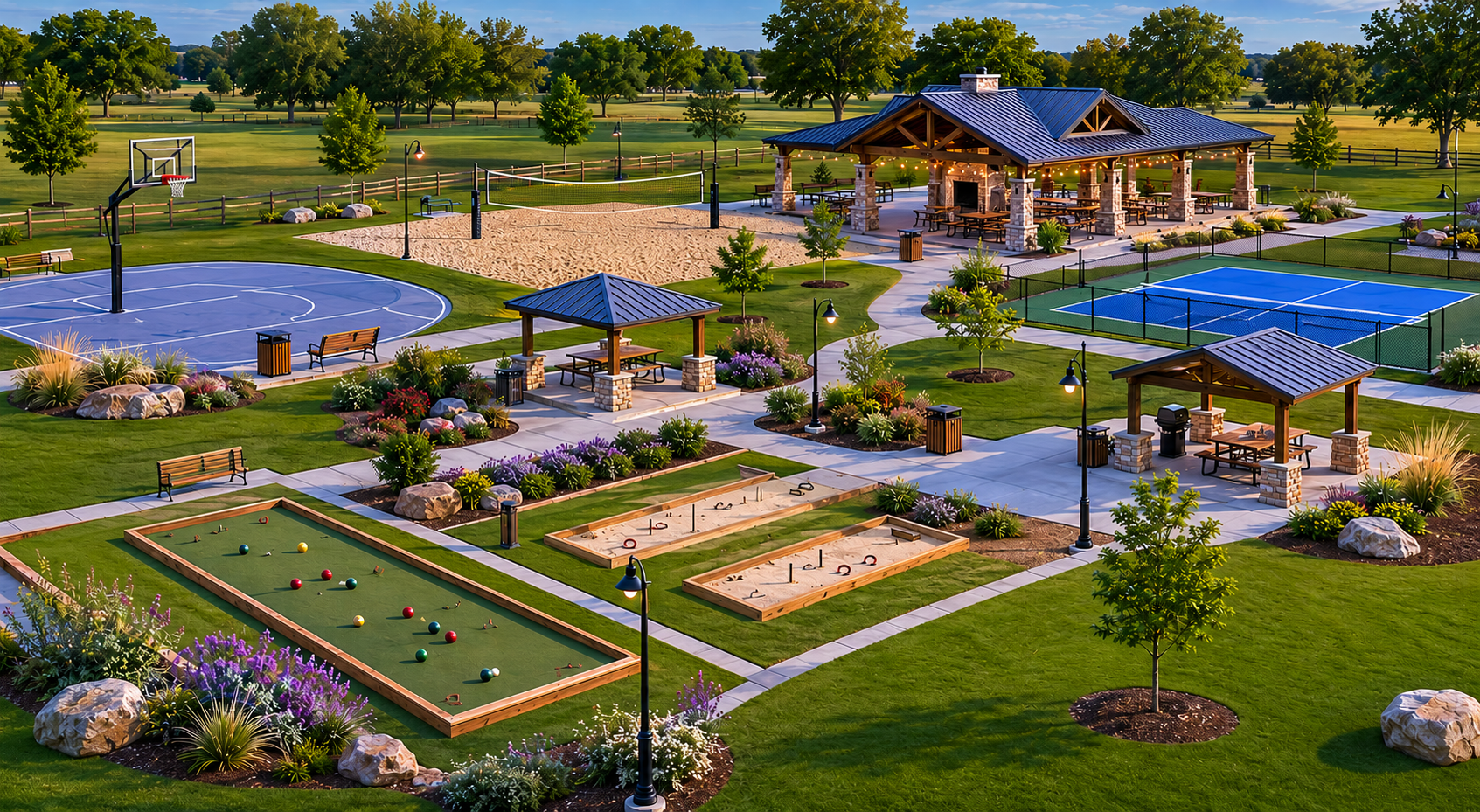
RISS is designed around the idea that stability is not rebuilt only inside classrooms, offices, or counseling rooms. It is also rebuilt outdoors — through movement, sunlight, recreation, healthy competition, shared meals, and ordinary moments of physical activity.
The Outdoor Life area is the active outdoor center of the campus. It is separate from the Commons, which is designed more for reflection, quiet gathering, and decompression. Outdoor Life is where residents can move, play, compete, cook, gather, and reconnect with the basic rhythm of being outside and active.
This area is planned to include outdoor table tennis, shuffleboard, bocce ball, pickleball, handball, sand volleyball, horseshoe pits, flexible lawn-game spaces, and a half-court basketball area. Some spaces will require hard surfaces, but the surrounding pathway system will remain softer and more natural wherever possible, using surfaces that are comfortable for walking, jogging, and everyday use.
The area will also include three pavilions. One larger pavilion will support 20 to 30 people and include an outdoor kitchen. Two smaller pavilions, placed among the activity areas, will seat 8 to 10 people each and include grills. These pavilions are not decorative extras. They are part of the campus rhythm: places to rest, talk, cook, watch a game, or gather after activity.
The Outdoor Life area connects directly to the larger movement system of the campus. From the primary campus pathway, residents can move into the active recreation areas, toward the dining facility, toward the gym and wellness buildings, or out onto the perimeter pathway.
The perimeter pathway is planned as a full campus loop. It will support walking, jogging, reflection, and structured exercise. Along the path, exercise stations will be placed in a standard park-trail style circuit, using a practical progression of bodyweight and movement-based equipment: stretching, pull-up bars, push-up and dip stations, core work, step-ups, balance, leg work, and combination movement stations. The intent is not to create a harsh fitness course. It is to create a usable daily movement path that residents can engage at their own level.
The perimeter pathway will also include landscaping, flowering beds, and fruit and nut trees planted in groupings rather than rigid rows. Planned trees include citrus, pear, plum, apple, peach, cherry, walnut, and pecan varieties as site conditions allow. The result is a pathway that is not just exercise infrastructure, but part of the larger campus environment: movement, shade, food-bearing landscape, seasonal change, and daily routine.
Outdoor activity at RISS is not treated as an afterthought. It is part of rebuilding health, self-confidence, social connection, and normal life.
Outdoor Life, Sports and Movement
If you believe reintegration should be built intentionally, not reactively, we invite you to explore how you can help bring the RISS model to life.